

Artificial intelligence could deliver the national economy a desperately needed productivity boost worth almost $120 billion and support the creation of tens of thousands of jobs, a nation-leading analysis has found.
Compiled by consultancy EY, the modelling of AI’s impact on the ability of workers to boost output suggests the technology will increase the size of the economy by between 2.6 per cent and 3.2 per cent by the middle of the next decade.
That lift, worth between $95 billion and $116 billion, will contribute to an increase in jobs of between 36,000 and 44,000. The increase in productivity with AI is expected to generate an additional burst of business investment worth up to $38 billion.
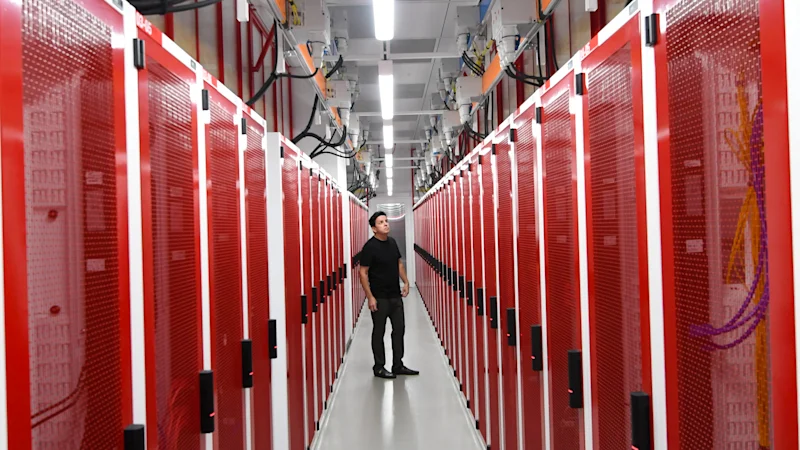
The country is in the midst of a data centre building boom, centred on NSW and Victoria, that by some comparisons will exceed the early 2010s mining boom that supercharged the economies of Western Australia and Queensland.
EY regional chief economist Cherelle Murphy said the research showed AI could turn around the nation’s poor productivity performance that many analysts believe has contributed to the sharp slowdown in Australians’ living standards and real wage growth.
“The analysis shows that if AI-driven productivity gains flow through to investment, capacity and output, they could deliver a meaningful lift to economic growth,” she said.
“The jobs story is not one of AI simply replacing workers across the economy. The modelling shows employment demand shifting towards sectors that benefit from stronger investment and household spending, while capital-intensive industries need fewer workers.”
Critics of AI fear that in many cases the technology will wipe out jobs. There is limited evidence of that occurring in Australia to date.
Global human resources and payroll consultancy ADP on Wednesday released research suggesting only a quarter of all Australian workers believe their job is safe from elimination by AI, automation and changing demographics.
But EY’s analysis shows many parts of the economy will need more staff because of AI.
Of the expected increase in jobs, close to 10,000 are forecast to be in construction, with a similar number in retail and wholesale trade. Another 6000 are expected to be created in the transport, postal and warehousing sector.
Financial services, hospitality, arts and recreation services, real estate and manufacturing are all tipped to enjoy an increase in jobs due to AI.
The research shows the construction sector is boosted because of the need to build data centres while installing equipment in those businesses that increase their use of AI-related technology.
Oxford Economics estimates the value of data centre construction and fit-outs alone will climb from $1 billion in 2020 to $26 billion this year to $60 billion in 2030.
Other sectors would enjoy a lift in jobs as the productivity gains delivered by the technology lifts real wages, which is expected to boost spending on goods and services.
But both the agriculture and broad mining sectors are forecast to suffer job losses of almost 3000 each.
These two sectors are capital-intensive, making them more susceptible to greater automation that would enable a reduction in workers and reduce cost overheads.
Murphy noted workforce mobility and “targeted reskilling” would be needed if businesses were to fully benefit from AI.
“A key priority for employers and government should be helping workers move into the sectors and parts of businesses where demand is expected to grow,” she said.
EY’s research, however, did find the surge in AI-related construction could add to inflation pressures across the economy as it had in the United States. But that would be offset by the deflationary impact of higher productivity once the technology was in place.
It also found AI could lead to more rapid retail price changes.
”AI may also increase risks around price stability, giving businesses the ability to continuously monitor demand, input costs and competitor prices,” it found.
“This could increase the frequency of price changes and the spread of price shocks.”
Most economic and political focus has been on the tens of billions of dollars being spent on the construction of data centres.
But EY noted there had also been a substantial increase in AI-related software, apps and cloud platforms, with growth running at 8.3 per cent over the past 12 months.
Software investment had also contributed to a sharp 4.9 per cent annual lift in research and development, well above the 0.6 per cent annual average increase through the 2010s.
Cut through the noise of federal politics with news, views and expert analysis. Subscribers can sign up to our weekly Inside Politics newsletter.
 Shane Wright is a senior economics correspondent for The Sydney Morning Herald and The Age.Connect via X or email.
From our partners